
Brain-Computer Interfaces: A Neural Foundation
Reading minds has always been a far-off fantasy, woven into children’s books and sci-fi television shows. However, breakthroughs in neurology research have shown that this fantasy may indeed become a reality, especially for those with disorders impairing the neural pathways involved in muscle function. These diseases affect nearly two million people in the United States alone. Evolving research in this field, therefore, has the potential to change lives drastically across the globe.
Generally, damaged pathways resulting from these neuromuscular disorders can be addressed by three main approaches. The first involves shifting communication mechanisms to rely more heavily on alternative pathways, such as using eye or hand movements. The second solution is to bypass the damaged neural pathways, allowing movement to still occur in the paralyzed muscles. However, these solutions are not adequate for all patients. For example, more severe diseases such as muscular dystrophies or amyotrophic lateral sclerosis (ALS) can result in “locked-in” paralysis. The aftermath is the near-complete inhibition of movement, even essential functions like respiration. While “locked-in” paralysis generally preserves eye movement, a better solution is needed to grant affected individuals greater autonomy. Therefore, the third, and perhaps most promising solution, is using an external device to act as the command center of the brain.
Evolving research has allowed for this extrinsic innovation. In 1924, Hanns Berger developed electroencephalography (EEG), making it possible to record brain activity. Nearly a century later, this foundation has evolved into brain-computer interfaces (BCIs), which have drastically transformed neurosurgery and neurology alike. Specifically, in the past fifteen years, advances within BCI research have proven to be successful by allowing patients with neuromuscular diseases, spinal cord injury, and brainstem strokes to have an advanced means of communication. While these multi-part systems are not exactly mind-reading, they may be as close as modern science gets to science fiction fantasies.
In reality, BCIs are simply converting electrophysiological signals (such as EEG rhythm, slow potentials at the cerebral cortex, or neuronal firing rate) from the central nervous system into commands for an external device. This activity is collected via electrodes on the scalp (non-invasive) or in the brain (invasive). Given that invasive BCIs directly interact with electrodes on the cerebral cortex in the brain, they provide high accuracy of brain activity. However, it is at the expense of extensive scarring. On the other hand, partially invasive BCIs are placed under the skull and therefore do not generally require open-brain surgery. Noninvasive BCIs, like EEG, have the capacity to externally record brain activity and do not require surgery at all, allowing for the risk of infection or tissue scarring to be minimized.
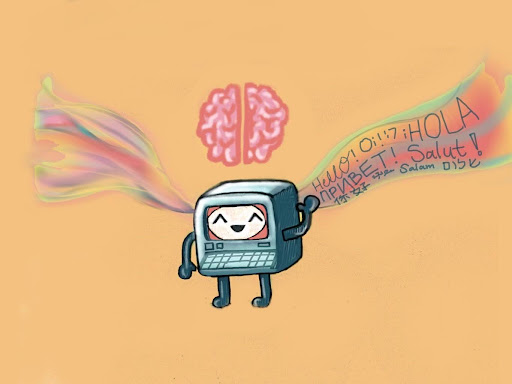
Regardless of the level of invasivity, the electrodes can detect specific neuron-fired potentials as an established set of identifiable brain events. This data is subsequently translated into commands that allow for action via a wheelchair or speech via a word processor. Thus, BCIs can map out brain activity, interpret that data, and finally translate the data into commands for an external device, which may range from a computer cursor to a robotic arm.
The largest benefit of BCIs is providing patients with an opportunity to regain autonomy. By restoring the ability to communicate, a freedom taken away by such degenerative diseases, patients can improve their quality of life. In stroke patients, the use of BCIs has had positive outcomes ranging from restoring motor control to enhancing mental and emotional well-being. Similarly, in dementia patients, positive outcomes via BCIs have included improved cognitive functioning over the course of six weeks in comparison to traditional therapies, such as physical exercise and musical intervention. Continuing the trend of strong results, this technology has also been employed to successfully detect early-onset dementia. Similarly, BCIs have proven to be key in understanding epilepsy, as current monitoring techniques, such as clinic visits or sporadic assessments, are not able to provide precise, continuous data with details such as seizure frequency, duration, and patterns–data that BCIs can deliver. Some BCIs have been able to detect brain signals specific to epilepsy and predict seizures with up to 97.2% accuracy. Therefore, as BCIs are proving to have positive clinical outcomes, researchers are hopeful of expanding their use to a greater audience.
Clinical Applications of BCIs
BCIs serve to help patients who have dysfunctional peripheral nervous systems and, consequently, impaired muscle function. Thus, BCIs come in many forms and can be appropriately selected based on the recommendations of the physician and the patient’s specific needs. Dependent BCIs require brain pathways because the interface only serves as an intermediate between the brain signal and movement. Alternatively, independent BCIs do not require the peripheral nervous system, as the BCI itself supplies the brain with the pathways to output information based on cognitive commands. In general, as independent BCIs have the greatest potential to support those with the most severe movement disorders, four of the five present-day BCI categories are independent BCIs, while only one is dependent.
BCIs can be further specified on the basis of the specific benefits they present to a patient. Assistive BCIs serve to address permanent disabilities by functioning as an alternative form of communication. In contrast, rehabilitative BCIs focus on restoring this inhibited communication through neurofeedback training and Hebbian learning–a neuroscientific theory proposing that “what fires together, wires together.” In its application to BCIs, this mnemonic describes the learning process by which repeated firing of neuron A to excite neuron B results in a strengthened interaction between the two neurons.
The COMMAND trial, a study funded by the National Institutes of Health’s Brain Research Through Advancing Innovating Neurotechnologies (BRAIN) Initiative, tested the “Stentrode” BCI. Many BCIs require open-brain surgery to insert the data-collecting electrode within the brain tissue. The largest risk of this procedure is scar tissue formation over time, interfering with the signal and therefore defeating the point of the implantation. However, as the Stentrode is a partially invasive BCI, the procedure calls for a stent to be snaked via the jugular vein in the neck into the superior sagittal sinus, located at the skull’s midline. The stent allows electrodes to record brain activity after the wire is plugged into an external device on the chest. Once in place and calibrated to the individual, the Stentrode allows for full independence in controlling a personal computer by enhancing the individual’s ability to engage in computerized speech, bank online, and even use social media. Physicians are confident in the safety and efficacy of Stentrode, with the first implant patient in 2022 returning home only two days after the procedure. Following this success, four Australian patients received the Stentrode implant and regained independent home use in under a year.
The results of another BCI research study published in August 2024 allowed for the “most accurate speech neuroprosthesis ever reported,” as stated by UC Davis Health neurosurgeon David Brandman. The study’s main focus was on Casey Harrell, a man who had lost his voice to ALS (Lou Gehrig’s disease). ALS is a neurodegenerative disease resulting in the loss of movement and speech due to its direct effect on cells involved in muscular function. The study’s greatest achievement was enabling Harrell to effectively communicate using the BCI shortly after its activation. In July 2023, the BCI device was implanted into Casey Harrell’s left precentral gyrus, the part of the brain responsible for speech coordination. The device itself consisted of four microelectrode arrays capable of detecting and decoding electrical signals within the brain. Harrell’s brain activity was recorded using 256 separate cortical electrodes, which were used to decode which muscles were attempting to produce speech. The outcome of the first session was successful. The BCI device allowed for 99.6% accuracy across a set of fifty vocabulary words. In a later session, a 90.2% accuracy rate was recorded for a set of 125,000 vocabulary words. Today, Harrell’s BCI system allows for a steady rate of 97% accuracy in decoding his speech. BCIs, therefore, prove to be highly effective for further application in transforming outlooks for ALS patients.
The Road Ahead: Ethical Dilemmas
While BCIs appear to have a bright future, further research must be conducted to ensure they are both reliable and affordable. Given the extensive fine-tuning required to personalize the BCI to the patient, one of the larger obstacles to this reliability is allowing BCIs to accurately convert neural signals into commands for computers. This calibration, combined with the lengthy process required to train users on how to utilize such technology, can pose an obstacle. Technical challenges that skew BCI accuracy may also arise in this calibration issue. Overlapping electrical signals, changing moods, and other factors all interact with BCI output.
Given the calibration necessary to yield accurate results, it is reasonable to expect that BCIs are not generally affordable as a treatment option. The high cost of production and training generates an inhibition to scalability, preventing BCIs from being universally accepted as clinical applications. However, all hope is not lost. With time, more affordable models may continue to hit the market. The Emotive EEG Neuro-headset, for example, is a high-frequency BCI that does not compromise high accuracy for its lower cost. If development continues in such a direction, widespread BCI affordability may entirely change the current outlook on neuromuscular disorders.
In addition, while research is advancing at an incredible pace, to have a practical perspective on its development, the patients and physicians alike must be informed about the realities of BCI research. Significant media attention regarding BCIs has misled the general public about the applications of BCIs, emphasizing the need for research-based studies rather than misinformation.
BCIs are not exactly mind-reading, nor do they contain all-knowing capabilities. They simply serve as a command center for the brain. Still, once research-based studies are established and conveyed, the question of ethics remains. Who can give consent for the use of BCIs for patients unable to speak for themselves? Who owns the data from the user’s brain, and who has access to it? These questions certainly highlight the uncharted territory of BCIs. Therefore, only as their development and accessibility continue to proliferate can these pressing matters be addressed. In the meantime, BCIs prove to be promising as the most advanced form of communication for those with neuromuscular disorders to date.
References:
https://www.sciencedirect.com/science/article/pii/S1878875024008672
https://reports.mountsinai.org/article/rehab2023-01-command
https://www.brown.edu/news/2024-08-14/bci-speak-again
https://www.sciencedirect.com/science/article/pii/S1388245702000573?via%3Dihub