
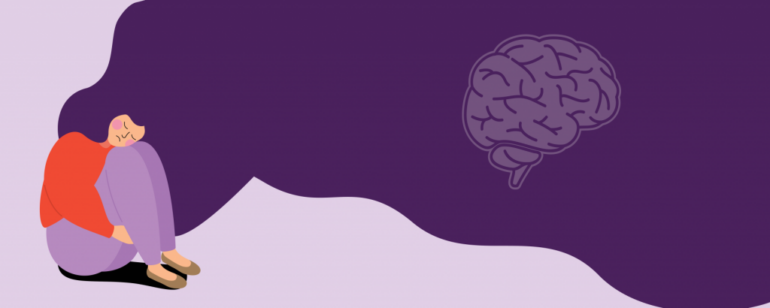
Recall Pixar’s Inside Out? In the movie, all memories are stored in little “orbs” that Riley’s emotions carefully sort through. It’s a fun way to picture how our minds store memorable events. But what happens when there are no birthday parties, soccer games, or simple conversations to fill those orbs? Actual memory doesn’t occupy radiant spheres, but it does rely on people around us. Our brains build up memories with the help of social molding through stories and support that we get from other people. When the support is taken away, our ability to recall and interpret can start to negatively change.
Researchers use two terms to describe this problem: social isolation and loneliness. Social isolation is the lack of contact with others, like living alone or rarely talking to anyone. Loneliness is the personal feeling of being cut off from meaningful relationships. Both are becoming big concerns, especially for older adults. Without strong social connections, we don’t just feel sad; our memory systems actually lose some of the backup they need to keep working well.

So why does spending too much time alone mess with memory? It turns out that connection isn’t just about happiness, it shapes the brain’s physical structure. Studies show that people who experience long-term loneliness often have changes in parts of the brain linked to learning, memory, and emotions. One area that stands out is the hippocampus, a small curved region deep in the brain that’s essential for forming new memories and remembering where events happened.
When we’re cut off from others, the body releases cortisol, a stress hormone. Chronic stress and high cortisol can inflame or even damage neurons in the hippocampus, speeding up age-related memory loss. This can make the brain more vulnerable to diseases such as Alzheimer’s disease. A review in “The Impact of Loneliness and Social Isolation on Cognitive Aging” explains how loneliness and stress together weaken the hippocampus and set the stage for dementia. This means that staying socially active isn’t just about feeling good; it literally protects the hardware that helps us remember.

Plenty of evidence now links loneliness to higher odds of dementia. One major study followed thousands of older adults and found that those who reported feeling lonely had about a 40% greater risk of developing dementia over time, even after other factors were taken into account. The recent COVID-19 lockdowns gave scientists a real-world look at what happens when people with memory problems suddenly lose contact with others. A Harvard Health article reported that around 60% of people with mild cognitive impairment or Alzheimer’s disease experienced worse memory or even delirium during the months of isolation. These findings fit with what neuroscientists have suspected for years: mental activity and social interaction keep the mind “exercised.” Conversations, shared jokes, and helping others all challenge our memory systems and keep them flexible. When that stimulation stops, it’s like letting a muscle waste away.

Still, it’s important not to oversimplify. Not everyone who spends time alone will develop dementia, and not everyone who feels lonely is losing their memory. Some studies suggest that subjective memory is often linked more to mood than to memory decline. For example, research on adult male twins found that memory complaints were often linked to not just anxiety or depression, but were also partly influenced by genetics. Other studies show that even short bursts of loneliness can make people feel like their thinking is worse, even if tests don’t show much change. Furthermore, findings from the English Longitudinal Study of Ageing reveal that depressive symptoms can blur the link between how people perceive their memory and how well they actually perform on cognitive tasks. While loneliness is clearly risky, we need to remember that emotions, personality, and biology all shape how people experience and report memory problems.
All of this science points to a larger issue of how we, as a society, value connection. In 2023, the U.S. Surgeon General released an advisory on social connection, calling loneliness and isolation a public health emergency. The report linked chronic disconnection not only to dementia but also to heart disease, depression, and even early death. As communities become more spread out and more of our communication moves online, it’s easy for people of old age or people with disabilities to feel left out.

There’s also an ethical side to consider. Researchers writing about behavior change and therapy warn against mixing up trait-like vulnerabilities, such as stable characteristics like genetics or lifelong shyness, with state-like ones, like temporary reactions to stress or life events. If we’re not careful, public messages about loneliness and dementia could scare people who are just having a quiet week or two. The goal isn’t to pathologize solitude, it’s to protect people from long-term, unwanted isolation that chips away at their mental and physical health.
So what do we take from all this? Social contact isn’t just for pleasure, it’s part of the foundation that keeps our brains running. Whether it’s a weekly coffee date, volunteering, or even chatting with neighbors, staying engaged helps preserve the hippocampus and other brain regions involved in memory. At the end of the day, memory, thinking, and social life are more than biological processes. They’re about what it means to live well and belong somewhere. Just like Inside Out reminds us that our brightest memories are tied to people and experiences, our own “memory orbs” depend on keeping connections alive. Making time for relationships isn’t just good manners, it’s brain care.
Sources:
https://pmc.ncbi.nlm.nih.gov/articles/PMC7437541/
https://www.thesupportivecare.com/blog/how-social-isolation-can-contribute-to-cognitive-decline
https://pmc.ncbi.nlm.nih.gov/articles/PMC10357115/
https://www.health.harvard.edu/mind-and-mood/how-isolation-affects-memory-and-thinking-skills
https://pmc.ncbi.nlm.nih.gov/articles/PMC7859252/
https://pubmed.ncbi.nlm.nih.gov/40539421/
https://pubmed.ncbi.nlm.nih.gov/30639919/
https://www.hhs.gov/sites/default/files/surgeon-general-social-connection-advisory.pdf
https://pmc.ncbi.nlm.nih.gov/articles/PMC7859252/
https://psychiatry.uchicago.edu/news/how-social-isolation-affects-brain
https://www.chrysalisfdn.org/shematters/3-vital-components-of-social-connection/
https://dailydiscoursebyfilmosopher.wordpress.com/2015/08/05/inside-out-review/
https://www.freepik.com/premium-vector/graphic-person-surrounded-by-friends-loved-ones-emphasizing-importance-social-connections-support-brain-health-vector-illustration_311609537.htm