Cover Illustration by Fiona Chen
A New Perspective on a Familiar Sweetener
When most people think of stevia, they picture a zero-calorie sweetener used for cutting sugar without sacrificing the taste of sweetness. However, emerging research suggests that this seemingly simple plant can do more than save one’s blood sugar—it could potentially help fight one of the deadliest diseases of modern time. Globally, cancer cases are expected to rise 47% by 2040 compared with 2020. Additionally, current cancer treatment methods such as chemotherapy, have extreme side effects and chemoresistance (does not respond to medicine). Thus, finding new and effective treatments is becoming extremely crucial.
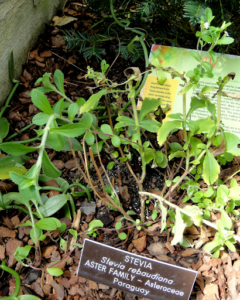
Image Source: https://upload.wikimedia.org/wikipedia/commons/8/85/Stevia_rebaudiana_-_United_States_Botanic_Garden_-_DSC09524.JPG
The Hidden Benefits of Stevia
Stevia, a commonly used sugar substitute, is widely valued due to its ability to lower glucose levels. According to the Cleveland Clinic, glucose levels account for the level of sugar in one’s blood. High glucose levels usually contribute to diabetes, which is when the body is unable to use insulin (a hormone that regulates blood sugar) properly. Having elevated glucose levels can lead to the development and progression of certain cancers. According to a PubMed article about the effects of stevia extract, the plant can indirectly reduce cancer risk as high blood sugar contributes to factors known to promote tumor growth–obesity, inflammation, and oxidative stress. Essentially, the reduced sugar levels can prevent cancer development by decreasing the essential nutrient supply (glucose) for tumor cells. The article also examines stevia derivatives (directly from the stevia source) and extracts (scientifically modified stevia) exhibiting anti-cancer effects through its lipid regulation capabilities–the ability to maintain healthy fat levels in the body. The stevia leaf extracts contain polyphenols and flavonoids, which are bioactive plant nutrients that protect cell components from oxidative damage. In turn, the plant reduces the risk of oxidative stress that causes tumor progression.
Insights from Multiple Cancer Studies
Ability to Block DNA Replication
In a study from Kobe-Gakuin University in Japan, researchers found that isosteviol and other stevia derivatives can inhibit fundamental enzymes involved in DNA replication and repair. By blocking these enzymes, stevia compounds help to stop the growth of cancer cells. Isosteviol (a stevia derivative) in particular was found to restrict the gamma (λ) DNA polymerase (an enzyme builder), which is involved in maintaining DNA duplication.
Additionally, the study determined that isosteviol prevented the growth of human cancer cells, specifically MOLT- 4 (a T-cell leukemia cell) and NUGC-3 (gastric cancer cell) at certain doses (between 84 and 167 mM). The inhibition of cancer cell growth matched the inhibition of DNA polymerase enzymes, suggesting that isosteviol stops cell growth by blocking these enzymes. Isosteviol was also observed to stop cells from dividing during the S-Phase–the step in which the cell duplicates its genetic material in preparation for division. Thus, monitoring how isosteviol interferes with the cell cycle is significant, as it can stop cancer cells from multiplying.
To experiment the efficiency of stevia derivatives, researchers applied a chemical called TPA (a tumor marker that influences cell growth) to mouse ears, which caused a 241% increase in swelling after seven hours. However, pretreating with 250 or 500 micrograms of isosteviol significantly reduced inflammation (by 25.8% and 53.0%). Since TPA sparks inflammation (which promotes tumor growth), isosteviol’s (stevia derivative) ability to calm inflammation suggests its potential to slow or prevent the development of cancer.
Cytotoxic Effects on Breast Cancer Cells
According to the World Health Organization (WHO), breast cancer was the most common cancer among women in 157 of 185 countries in 2022, with an alarmingly grand death toll of 670,000 deaths. The high rate of incidence and mortality raises concern for investing in research for breast cancer prevention and cures.
In a study at the Birla Institute of Technology, researchers investigated the anti-cancer effects of stevioside, a purified stevia compound, on human breast cancer cells–MDA-MB-231 and SKBR3. The study used flow cytometry to measure apoptosis (natural cell death) in the MDA-MB-231 breast cancer cells. Treatment with purified stevioside or 5-FU (chemotherapy drug) alone resulted in moderate apoptosis (9.3% and 6.3%), while the combination of the two significantly increased apoptosis (24.1%). The results showed that the stevioside effectively stopped the growth of breast cancer cells by inducing cell death. Therefore, the findings suggest that stevioside (a compound that is derived from stevia) enhances 5-FU’s ability to trigger cancer apoptosis. In MDA-MB-231 breast cancer cells, the combination highlighted a 64% increase in cytotoxicity (the ability to kill or damage cells), while the SKBR3 cells showed a 60% increase in cytotoxicity. The cytotoxic effect is beneficial by targeting and eliminating harmful cancer cells, in turn prevents their growth and spread.
Anticancer Effects of Fermented Stevia Leaf Extract on Pancreatic Cancer
A research team from Hiroshima University determined that stevia combined with probiotics can kill off pancreatic cancer cells without harming kidney cells. This study shows that fermenting stevia leaf extra with Lactobacillus plantarum SN13T (a lactic acid bacteria with probiotic properties) enhances its anti-cancer effects against PANC-1 (pancreatic cancer cells) while being minimally toxic to HEK-293 (normal body cells). However, the effectiveness is dependent on factors such as fermentation method, temperature, pH, and duration. To determine the optimal stevia fermentation for anti-cancer efforts, the researchers tested different fermentation times, temperatures, and oxygen conditions. The team did not find a significant difference in anaerobic (without oxygen) and aerobic (with oxygen) fermentation, but anaerobic showed higher cytotoxicity of PANC-1 cells. After deliberation, the team found the optimal conditions to be anaerobic fermentation at 37°C for 72 hours. Thus, the fermented stevia leaf extract’s (FSLE) enhanced effects highlight the potential of probiotic fermentation in boosting natural anti-cancer agents.
The study compared the effects of regular stevia leaf extract (SLE) and FSLE on both pancreatic cancer cells and normal kidney cells. The two extracts demonstrated a reduction in cell viability with FSLE being more potent and causing greater changes such as cell detachment and shrinkage. These results suggest that fermentation enhances the bioactivity of stevia. The researchers evaluated the effect of FSLE on the increase of PANC-1 cancer cells, finding that the treatment inhibited the proliferation (growth) and migration of the pancreatic cancer cells. Furthermore, the study observed that the active compound chlorogenic acid methyl ester (CAME), a compound from the fermented extract, increased the expression of the E-cadherin gene. The elevated gene activity amplified the cell’s ability to stick to each other, which supported its role in limiting cancer cell movement. Stronger adhesion of the cancer cells makes it harder for them to detach and spread to other parts of the body. CAME subsequently suppressed the expression of Bcl-2 gene, which prevents cell death by supporting cell survival. By reducing Bcl-2 levels, CAME removes this survival pathway, making cancer cells undergo apoptosis more effectively. The change induced by CAME triggers the mitochondria (cellular powerhouse) to release Cytochrome c, which activates caspases–enzymes that initiate cell death. Since CAME is only found in fermented stevia, the article suggests that fermentation enhances stevia’s effectiveness at fighting cancer.
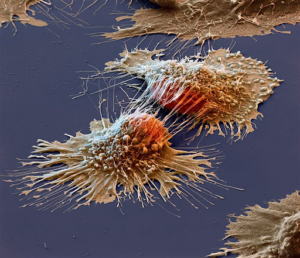
Image Source: https://live.staticflickr.com/65535/50263680922_f100d40e79_c.jpg
Safety, Challenges, and Moving Forward
Only a few studies have tested stevia’s cancer-fighting capabilities in living organisms. Therefore, more research is needed before scientists can be sure stevia is safe and effective enough to use as cancer treatment. In the case of the pancreatic cancer study at Hiroshima University, researchers plan to examine the effects of stevia and probiotics on mice to understand the effectiveness of different dosages on an entire body system.
In conclusion, stevia is emerging as more than just a sugar substitute. The plant offers many pathways for potential cancer prevention and therapy, by regulating blood sugar and oxidative stress, inhibiting cancer cell growth, and promoting apoptosis. Fermentation with probiotics further enhances its effectiveness, such as producing compounds like CAME that strengthen its anti-cancer properties.
The efficacy of stevia and its compounds is particularly important in the context of global cancer trends. With cancer cases expected to increase by nearly 50% by 2040 and current treatments limited by severe side effects, having newer and safer care approaches are urgently needed. Stevia and its bioactive compounds may provide a complementary approach to the current remedies by targeting the various mechanisms of tumor growth, while also limiting harm to healthy cells. As research progresses, stevia has the potential to play a meaningful role in reducing the burden of cancer worldwide.
References
Cleveland Clinic. (202, February 2). Blood Glucose (Sugar) Test. Cleveland Clinic. Retrieved August 12, 2025, from https://my.clevelandclinic.org/health/diagnostics/12363-blood-glucose-test
Iatridis, N., Kougioumtzi, A., Vlataki, K., Papadaki, S., & Magklara, A. (2022). Anti-Cancer Properties of Stevia rebaudiana; More than a Sweetener. Molecules (Basel, Switzerland), 27(4), 1362. https://doi.org/10.3390/molecules27041362
Khare, N., & Chandra, S. (2019). Stevioside mediated chemosensitization studies and cytotoxicity assay on breast cancer cell lines MDA-MB-231 and SKBR3. Saudi journal of biological sciences, 26(7), 1596–1601. https://doi.org/10.1016/j.sjbs.2018.10.009
Mizushina, Y., Akihisa, T., Ukiya, M., Hamasaki, Y., Murakami-Nakai, C., Kuriyama, I., Takeuchi, T., Sugawara, F., & Yoshida, H. (2005, June 1). Structural analysis of isosteviol and related compounds as DNA polymerase and DNA topoisomerase inhibitors. Elsevier. Retrieved August 12, 2025, from https://doi.org/10.1016/j.lfs.2005.03.022
World Health Organization. (2025, August 11). Breast cancer. World Health Organization (WHO). Retrieved August 12, 2025, from https://www.who.int/news-room/fact-sheets/detail/breast-cancer
Zhang, R., Danshiitsoodol, N., Noda, M., Yonezawa, S., Kanno, K., & Sugiyama, M. (2025). Stevia Leaf Extract Fermented with Plant-Derived Lactobacillus plantarum SN13T Displays Anticancer Activity to Pancreatic Cancer PANC-1 Cell Line. International journal of molecular sciences, 26(9), 4186. https://doi.org/10.3390/ijms26094186